
Selling a home
South Carolina seller disclosure: all 28 questions
What the state form asks, who is exempt, and the extra papers some homes need.
- 28 questionson the state form, each Yes, No or No Representation
- 8 itemsask about the years you owned the home
- 15 kinds of saleneed no form
By Devin Day, Operations Officer · Reviewed by Tim Nash, Broker-in-Charge · Updated November 15, 2026
Who must fill in the state form, what its 28 numbered questions mean, and what happens if a seller leaves something out.
The short answer
A South Carolina seller must give the buyer the state's disclosure form, filled in and signed, before both sign the contract. The form asks what you know about the home, and a seller who knowingly leaves a problem off can owe the buyer their losses.
Fifteen kinds of sale need no form. Two things touch many Grand Strand sales. One is the flood questions about the years you owned the home. The other is a beachfront statement for homes on lots past the state's setback line, about 10,700 in Horry County.
Selling soon? Start with your flood zone.
Have us look up your flood zoneWho has to fill out a seller disclosure in South Carolina?
The owner of a home with one to four units who sells it. The state law applies to a house, a condo, a townhouse or a building of up to four homes. It applies to a sale, a trade, a land contract, where the buyer pays you over time, and a lease with an option to buy.
The law's duty falls on each owner named in the contract. The form has signature lines for the owners.
The form covers the home itself, not shared areas you have no direct responsibility for, such as a condo's common areas. The condo addendum still asks about problems you know of in the shared areas.
The law lists no exemption for an investor, a landlord, a second-home owner or a company. The "never lived in" exemption covers only the first sale of a home no one has ever lived in. A rental you never lived in still needs the form, unless the sale is one of the 15 exempt kinds. Our page on selling a rental property covers the rest of that sale.
Which sales do not need the disclosure form?
South Carolina lists 15 kinds of sale that need no form. Find yours:
- Only to close familyA sale only to your spouse, or only to your children, grandchildren, parents or grandparents. If your child's spouse is also a buyer, the sale needs the form.
- Only between co-ownersOne owner sells to the other owners, and no one else is a buyer.
- An executor, trustee or courtA sale by an executor or trustee settling an estate or a trust, or a sale under a court order. Our page on selling an inherited house covers the rest.
- The foreclosure, and the lender's sale after itThe foreclosure sale itself, and a sale by a lender that took the home at a foreclosure sale.
- A transfer between spousesA transfer between spouses under a divorce decree or a court's property order. A sale to a buyer outside the marriage needs the form, unless it is another exempt kind. See selling in a divorce.
- The first sale of a new homeA home no one has ever lived in, sold for the first time. Our new construction page covers buying one.
- A tax saleA transfer because an owner did not pay federal, state or local taxes.
- A public auctionA home sold at a public auction.
- A timeshareA vacation time share, or a share in a vacation home owned by many people.
- Both sides agree in writingBuyer and seller both agree in writing not to complete the form. Neither side has to agree.
The other three are a sale to or from the federal government, a sale to the State, and a transfer to a residential trust. If you are not sure your sale fits one of the 15, the closing attorney can say.
Selling "as is", which means without repairs, still needs the form, unless the sale is one of the 15 kinds. Our pages on repairs before selling and cash offers cover those choices.
Not sure your sale needs the form?
Tell us who you are selling to and how. An agent checks your sale against the state's list and marks anything the closing attorney should decide.
Ask us about your saleWhen do you give the buyer the seller disclosure?
Before the buyer signs the contract, unless your contract names another time.
- When you listFill it in and sign itAnswer from what you know and the records you have.
- Before the contractThe buyer gets it and signs for itThe buyer's signature says they received it.
- Until closingKeep it trueIf the roof starts to leak after you hand it over, correct the form or make the repair before closing.
A missing form does not cancel the contract or stop the closing, and it does not put a defect on the title. A seller who knowingly skips it still breaks a duty under the same law.
What do Yes, No and No Representation mean on the form?
Each answer is about what you know. The form asks about problems, which it says include present defects, malfunctions, damage, conditions or characteristics.
- Yes
- You know of a problem. Explain it on the form, or attach a report from an engineer, a contractor, a pest control company or another expert.
- No
- You have no actual knowledge of a problem.
- No Representation
- You do not know enough to answer Yes or No. It is not a way to skip a question. It does not protect you if you know of the problem, or learn of it later.
For questions 15 to 28, the form asks what you know or were told in a notice, such as a letter from the county. The law does not define "actual knowledge" beyond the form's words. A question about what you should have known goes to a South Carolina attorney.
The form says that if you attach an expert's report, you are not liable for its mistakes. The exception is if you were grossly negligent, meaning careless in a serious way, in getting it or passing it on.
Selling without an agent?
The form is yours to fill in either way. Our coaching for owners includes reading it before a buyer sees it, for a flat fee that is credited back if you list with us later.
Ask us about coaching for ownersWhat does the South Carolina disclosure form ask?
The state form has nine parts of questions, one for each subject the law names, and a last part for explaining your Yes answers. It asks 28 numbered questions, each answered Yes, No or No Representation.
It also has lines where you describe things such as where the water comes from, the roof's age, termite treatment, leases and contamination. A home in a homeowners association (HOA), a property owners association or a condo association also needs the addendum.
The South Carolina disclosure form, every question
The brown numbers mark the 8 items that ask only about the years you owned the home. Letters mark lines where you describe something.
Part I Water and sewer
Part II Roof and structure
Part III Plumbing, electrical, heating and cooling
Part IV Termites and pests
Part V Rules, permits, title and water
Part VI Lead, mold and other hazards
Part VII Leases and vacation rentals
Part VIII Utility charges
Part IX Homeowners association (HOA)
Addendum For a home in an HOA or condo association
- The addendum also asks the dues, what period they cover, and how to reach the association.
Our short wording of the state form, updated June 2025. Download the form for the full wording of each question.
Our HOA documents page lists the association papers a buyer asks for. If you are selling without an agent, our for-sale-by-owner page covers the rest of that sale.
Do you have to disclose a problem you already fixed?
Yes, for the roof, the structure and flood damage. The form asks you to describe roof leaks and repairs, and structural repairs, made while you owned the home, with dates. It also asks for flood claims, and for flood repairs you paid for without a claim.
Leases and vacation rentals
Leases and vacation rentals in place at closing go on the form. Under the state's Vacation Rental Act, the seller lists every future rental period in writing before the contract. The buyer takes the home subject to rentals under that act that begin within 90 days after the deed is recorded.
That act does not cover a condo rented through a hotel-style front desk. The closing attorney can say which rules apply to yours. Our pages on selling a condo and selling a rental cover the bookings.
Want your answers read before a buyer sees them?
Send us the form once it is filled in. An agent reads it and marks any Yes that still needs an explanation or a report.
Send us your form to readDo you have to disclose flooding when you sell a house in South Carolina?
Yes. Every seller answers the form's flood questions, wherever the home is. Nearly 1 in 4 of the flood insurance claims FEMA has paid in Horry County were on buildings rated outside the high-risk flood zone.
Question 20 asks whether the house flooded while you owned it. Questions 22 to 28 ask about erosion, flood zones and flood risk, and whether the home has flood insurance now.
They also ask about flood claims, flood repairs without a claim, federal flood aid and charges for beach renourishment, which is sand added back to the beach. Five of these questions, 20 and 25 to 28, ask only about the years you owned the home.
The storms your answers can cover
We checked the last recorded sale of every home in Horry County. More than 1 in 3 (37 percent) last sold before Hurricane Florence in September 2018. About 3 in 10 (29 percent) last sold before Hurricane Matthew in October 2016.
If you have owned your home since before those storms, the form's questions about "your ownership" cover them. FEMA paid more than 1,000 flood claims in the county for Matthew and nearly 900 for Florence.
Your home's flood claim record
FEMA gives the owner the flood insurance claims and payments on the home, including those from before you owned it. A buyer cannot get them. To ask for yours:
- Where to send itIn writing to FEMA's records office, or online at dhs.gov/foia. Mark it "Privacy Act Request".
- What to put in itYour full name, current address, date and place of birth and country of citizenship, and the home's address.
- How to sign itBefore a notary, or with a statement that it is true under penalty of perjury, as the federal rule allows.
Question 25 asks only about claims while you owned the home. Question 23 asks about any flood risk you know of, and the form says you must disclose what you know when you fill it in. A South Carolina attorney can say whether an older claim belongs in your answer to question 23.
The CLUE report
The insurance industry's claims report on a home is called a CLUE report. Only the owner, an insurer or a lender can order it. It covers recent years of roof, wind and water claims.
You order it from LexisNexis Risk Solutions, online, by phone or by mail. Our page on undisclosed flooding shows what a buyer can find out about a home's flood past. Flood insurance costs are on our coastal insurance page.
What extra disclosure does a beachfront home need?
The state draws a beachfront setback line a set distance inland from the top of the main sand dune. A home on a lot that reaches past that line, toward the ocean, needs a second statement in the sale contract.
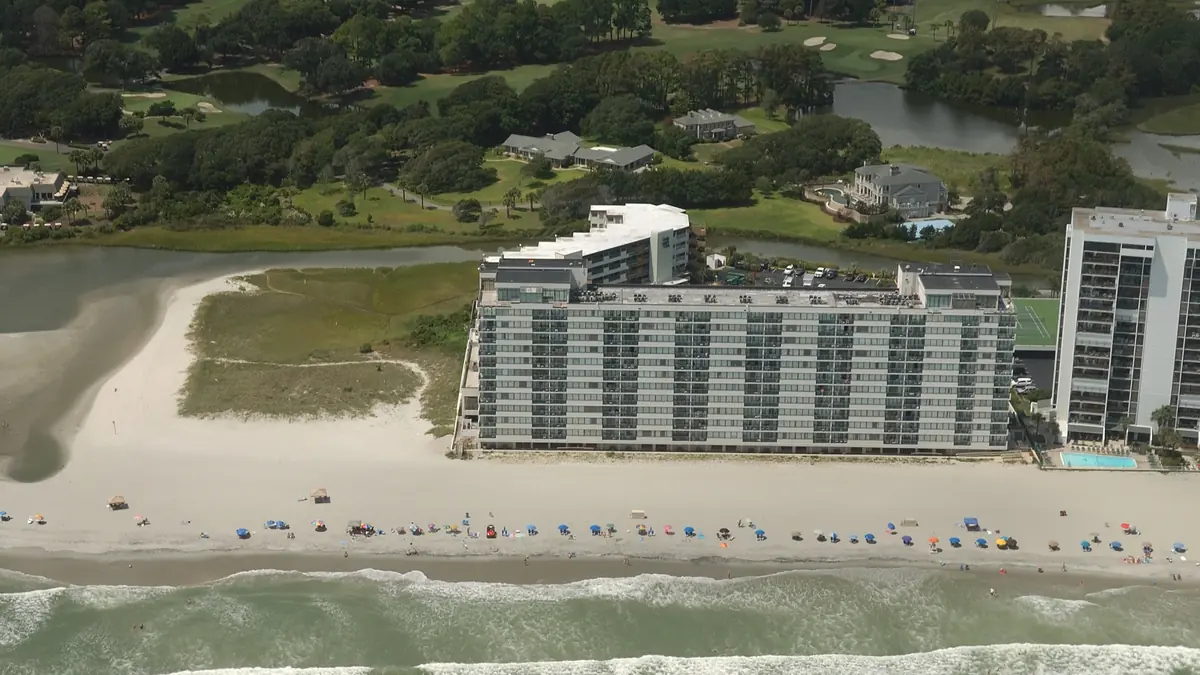
State law says the contract must state that the property is or may be affected by the state's beach lines. Leaving the statement out does not make the contract invalid.
We checked every home parcel in Horry County against the state's setback line map. About 10,700 homes are on lots that reach past that line. Nearly 9 in 10 are condo units, and about 500 are houses.
A survey settles where the line falls on a given lot.
Selling an oceanfront condo or house?
Tell us the address. We raise the beachfront statement with the closing attorney at the start, so it is in the contract when you sign.
Ask us about an oceanfront saleDo you need a lead paint disclosure in South Carolina?
Yes, for most homes built before 1978. Federal law adds four steps to the sale:
- The pamphletGive the buyer the federal lead pamphlet.
- What you knowSay what you know about lead paint in the home, and hand over any lead reports.
- The warningThe contract must include a lead warning statement.
- The test periodThe buyer gets 10 days to test for lead, unless you both agree in writing to a different period or the buyer waives it.
Keep the signed form for three years. Four cases are not covered. One is a unit with no bedroom, such as a studio, where no child under six lives.
Another is housing for older people or people with disabilities where no child under six lives. The other two are a home a certified inspector found free of lead paint, and a foreclosure sale.
About 1 in 6 homes in Horry County (16 percent) was built before 1980. The share changes a lot by town: about 1 in 3 in Conway and Surfside Beach, and about 1 percent in Carolina Forest.
The Census counts homes by decade, so the chart shows homes built before 1980. The share built before 1978 is a little lower.
Selling a house built in the 1970s or before?
Send us the address. We confirm the year built in the county's records and add the lead form and pamphlet to your papers before you list.
Have us check the year builtWhat do you not have to disclose in South Carolina?
South Carolina law names three things a seller does not have to disclose:
- A death in the homeThat someone died in the home, or how they died.
- An illnessThat someone who lived there had a disease that medical evidence shows is highly unlikely to spread through living in the home.
- The sex offender registryPublic information from the state's sex offender registry.
If a buyer asks you directly about any of them, you may not lie.
What happens if a seller does not disclose something?
A seller who knowingly leaves a problem off the form, or answers falsely, can owe the buyer their actual losses and court costs. A court may add the winner's attorney fees.
Under the disclosure law, the buyer keeps every other legal right. Many claims in South Carolina must be filed within three years (SC Code 15-3-530). When the clock starts depends on the claim; an attorney can say which applies.
Your agent cannot hide what they know
The form says a real estate agent must disclose material adverse facts they know of about the home, whatever the owner answers. A material adverse fact is a problem that significantly lowers the home's value or soundness, or is a significant health risk to the people who live there.
A listing agent must tell you in writing what the law requires of you. An agent is not liable for your false answers if they did not know or have reason to suspect they were false.
The form is not a warranty, and it does not replace the buyer's inspection. The law keeps the buyer's duty to inspect, and agents have no duty to inspect.
How do you fill out a seller disclosure, step by step?
Seven steps, from the first look at the form to closing day:
- Check whether your sale needs itCompare your sale with the 15 exempt kinds above.
- Gather your recordsThe roof's year and repair bills, permits for any work, your termite contract, the HOA dues and contact, and any lease or rental booking. For the parcel number and the deed, use our Horry County property search by address.
- Get your flood and insurance historyAsk FEMA for your home's flood claim record, and order its CLUE report. The flooding section says how to ask for each.
- Answer every questionYes means you explain it or attach a report.
- Built before 1978? Add the lead papersThe federal lead form and the pamphlet.
- On the beach? Add the setback statementYour agent raises it with the closing attorney before the contract.
- Give it to the buyer before the contractKeep a copy the buyer signed, and keep it true until closing.
Common questions
Seller disclosure FAQ
Is a seller disclosure required for new construction in South Carolina?
Not for the first sale of a home no one has ever lived in. Every later sale of that home needs the form, unless it is another of the 15 exempt kinds.
Can a buyer and seller agree to skip the disclosure form?
Yes. Both must agree in writing not to complete it, and neither side has to agree.
How long is a seller's disclosure good for?
Until closing. If anything changes before then, the seller corrects the form or makes the repair.
Does an investor who never lived in the house have to fill it in?
Yes, unless the sale is one of the 15 exempt kinds. The law lists no exemption for an investor, a landlord or a company.
Do you have to disclose a death in a house in South Carolina?
No. If a buyer asks you directly, you may not lie about it.
Sources: SC Code 27-50, SC disclosure form, SC Code 48-39, SC Code 15-3, SC Code 40-57, EPA lead rule, FEMA NFIP data FAQ, OpenFEMA claims, 6 CFR 5.21, Utah CLUE, Tennessee CLUE, Horry County parcels, Census B25034. Our counts from county parcels, the state's setback line and FEMA claims. The checklist is our short wording of the form.
Legal notice. Chapter3 Realty Corp is a licensed South Carolina real estate brokerage. We are not attorneys. This page states the law and the state's form; it is not legal advice. For advice on your own sale, talk to a South Carolina attorney.
Selling a home on the Grand Strand?
Send us the address. We price it from recorded sales near it and go through the disclosure form with you before the first showing.
Have us plan your sale